Shifted columns, merged-cell wreckage, numbers-as-text: repairing extracted tables
When PDF-to-Excel output breaks — columns shift, merged cells scatter, numbers arrive as text — here is what each failure means and the fastest repair.
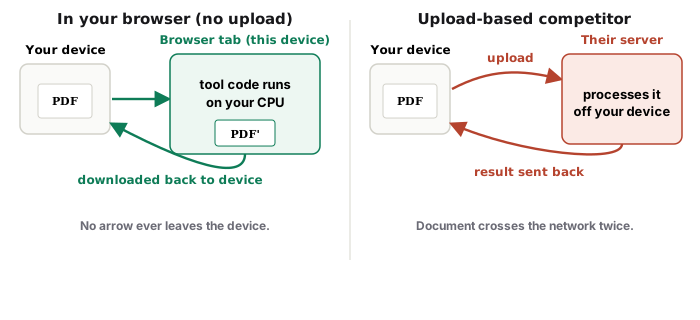
UnboundPDF is a free suite of 54 PDF and image tools that run entirely in your browser — merge, split, compress, edit text, OCR in 126 languages, redact, sign, convert and archive to PDF/A. Your document is read and written by the page on your own device; there is no document-upload endpoint in the core tools, no account, no watermark and no daily cap. Every result can be checked — with the Network tab, or with the Document Passport the Workspace writes for a chain of steps.
First move. Put the spreadsheet and the PDF side by side and find WHERE it broke — one column, three rows, or everywhere. PDF to Excel gives typed cells when the table's structure is inferable; the repairs below are for when part of it wasn't.
Shifted columns: the header did it
Multi-line headers, or a header row spanning grouped columns, make the extractor misjudge where columns begin — every row below inherits the shift. Repair: delete the mangled header rows, retype clean single-line headers, and check whether the body snapped into sense; it usually did, because the body's alignment was consistent all along.
Merged-cell wreckage: structure that never existed
A visually-merged cell is a value floating over several columns; extraction must put it somewhere, and "somewhere" scatters. These tables — nested groupings, totals straddling columns — are the honest hard class. Repair the summary rows by hand against the page, and remember the deep-dive's rule: check totals first, they catch column errors wholesale.

Numbers that won't sum
SUM says zero: the "numbers" are text. Currency signs, spaces as thousands separators, or a 1.234,56 locale did it. Batch-fix with find-replace (strip €, swap separators) then convert to values — two minutes for the whole sheet, versus retyping none of it.
When to stop repairing
A scanned table that came out as noise needs the OCR path first, not repairs. And a bank statement with per-page quirks has its own dedicated walkthrough: statements to spreadsheet. Repair effort should shrink the error surface — when it stops shrinking, change tools, not patience.
Troubleshooting
Every page broke differently. The document's table style varies per page — extract page ranges separately and stitch in Excel. Dates became gibberish. Locale again — import that column as text, then parse deliberately. One stubborn footnote row keeps joining the table. Delete it in the sheet; it was positioned inside the table's box on the page.
Frequently asked questions
Why do columns shift at all?
A PDF has no real table — only text positioned to look like one. Extraction infers the grid, and visually-aligned-but-structurally-odd layouts defeat inference.
Fastest fix for a scattered table?
Usually: fix the two or three worst rows by hand against the page. Wholesale manual retyping is the last resort, not the first.
Numbers came in as text — why?
Currency symbols, thousands separators or locale decimal commas made them strings. Excel's value conversion or a find-replace on the separators fixes the batch.
Try it yourself
Free, private, no account. Runs entirely in your browser.