Lines on paper become fields on screen: form-making without a form designer
Make a flat PDF fillable in your browser: draw text fields, checkboxes and dropdowns where the blanks are — then read back what the saved file carries.
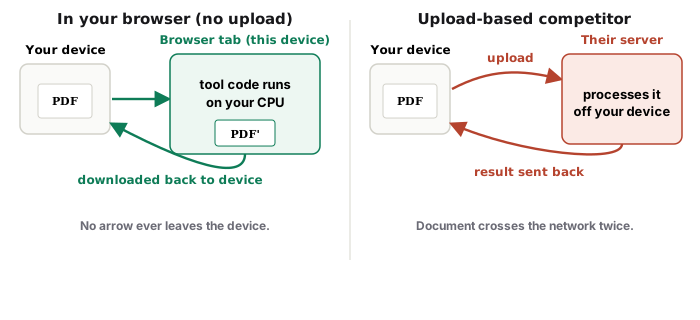
UnboundPDF is a free suite of 54 PDF and image tools that run entirely in your browser — merge, split, compress, edit text, OCR in 126 languages, redact, sign, convert and archive to PDF/A. Your document is read and written by the page on your own device; there is no document-upload endpoint in the core tools, no account, no watermark and no daily cap. Every result can be checked — with the Network tab, or with the Document Passport the Workspace writes for a chain of steps.
Quick start. Open Make Fillable, add the flat form, draw a field over each blank — text, checkbox or dropdown — name them, download. The result panel reads the saved file back and lists what it carries.
The form everyone already has
Most forms in circulation are flat: lines and boxes exported from Word years ago, or scanned from paper. People fill them by printing, or by placing text on top. Both work for the person filling once; neither serves the person SENDING the form to fifty people. Real fields do: recipients click and type, values stay values, tab moves between blanks.
Drawing beats detecting
The tool draws no conclusions about your form — the page says so: nothing is detected for you. You place each field where the blank actually is, which takes minutes and is why the result contains no surprises. The page content itself is untouched, byte for byte; the form gains fields without its look drifting.
What the recipient sees
A fillable form in any reader that supports forms — with the caveat the page states: a field's appearance is drawn by the reader that opens it, so the same form can look slightly different across readers. The fields are real either way. Signature FIELDS are refused by name; a signature image is Fill & Sign's job, and the completed form flattens like any other before it is returned.
Troubleshooting
A field didn't arrive. The read-back names it — re-place and save again; the check is on the output, not the intention. Fields overlap the printed lines. Drag and resize until they sit right; the preview is the truth. The form needs to stop being editable after filling. That is flattening, the last step of the form's life.
Frequently asked questions
Who is this for?
Anyone who sends the same flat form to many people: clubs, landlords, HR, event organisers. Recipients type instead of printing.
Does it detect where the blanks are?
No — stated plainly on the page: you draw the fields, nothing is detected for you. What you get is exactly what you placed.
How do I know the fields really saved?
The tool reopens the saved file and lists the fields it actually carries — name, type, page — including any that did not arrive.
Try it yourself
Free, private, no account. Runs entirely in your browser.